- 3. March 2026
- |dennydeutscher
- |No Comments
Large teams often look more professional at first glance.
That doesn’t automatically mean they deliver better results.
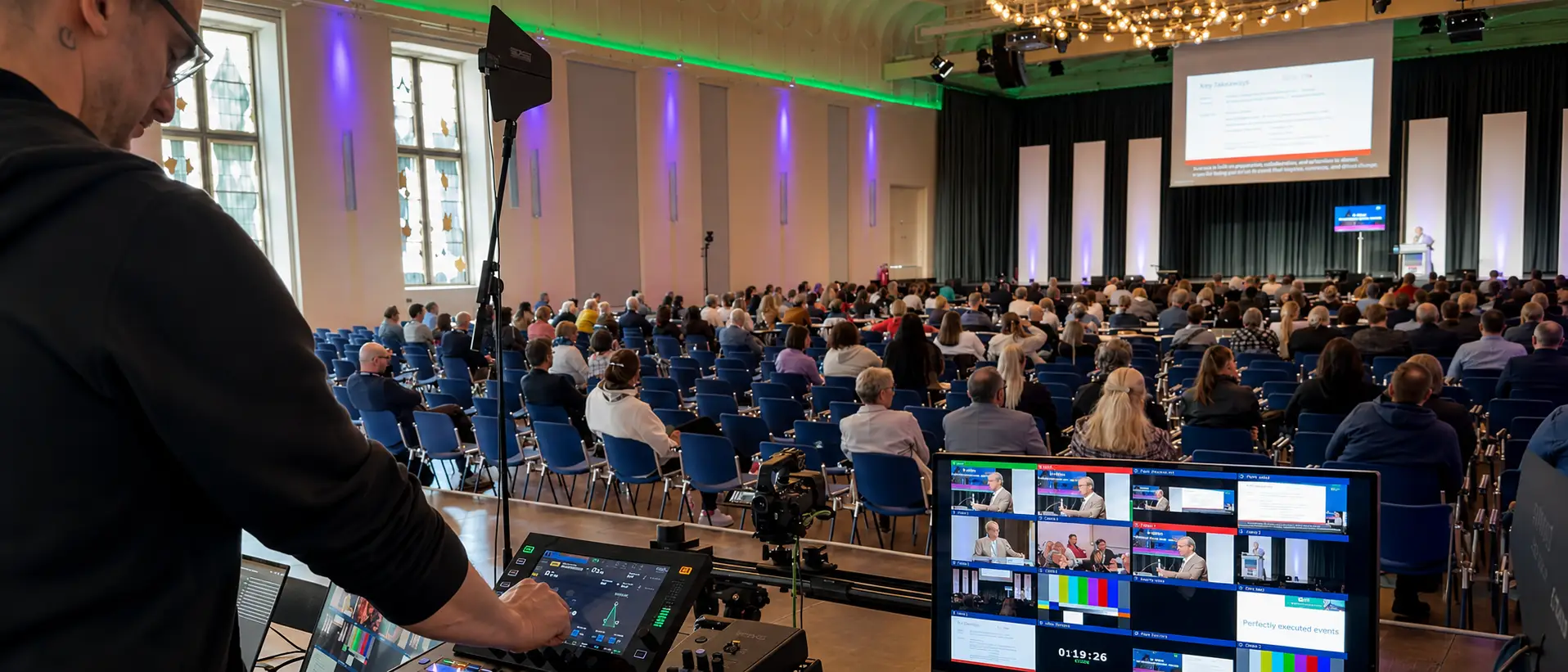
Especially for small and mid-sized events, high-quality livestream productions today are often driven by efficient workflows, automation and well-structured setups — not by having as many people on site as possible.
Traditional Setups: More Tasks, More People
Many productions still follow traditional broadcast structures with separate operators, manual camera work and multiple systems running in parallel.
That approach works — but it also creates more coordination, more handovers and more complexity during a live production.
Especially for straightforward conference formats or stage presentations, that level of overhead is often unnecessary.
It’s not the size of the team that matters — it’s the quality of the workflow.
What Has Changed
Technology and workflows have evolved significantly over the last few years.
Today, productions can be run far more efficiently — without compromising quality.
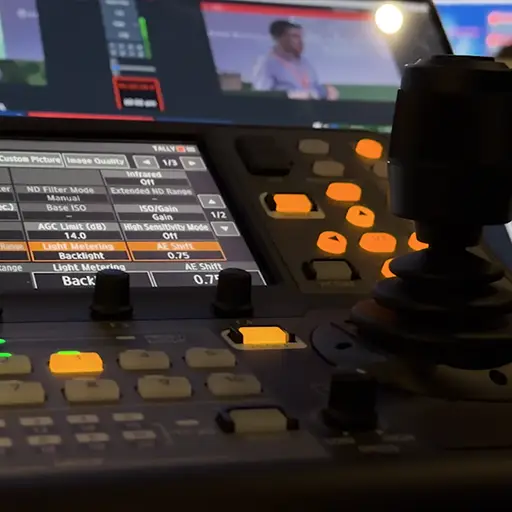
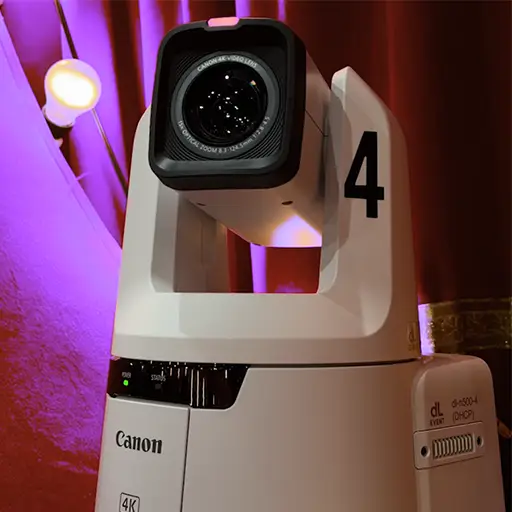
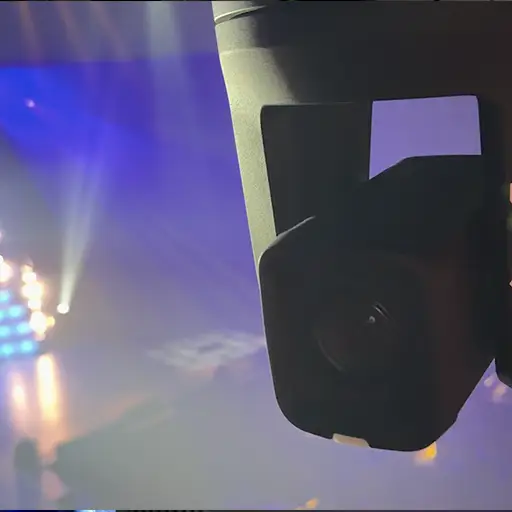
Centralized PTZ camera systems , IP-based signal distribution, automated workflows and redundant systems help reduce crew size while creating more control behind the scenes.
What that actually means often shows up in small details:
Presentations are frequently finalized just minutes before the event starts. Thanks to redundant systems and parallel workstations, changes can still be handled without slowing down the production.
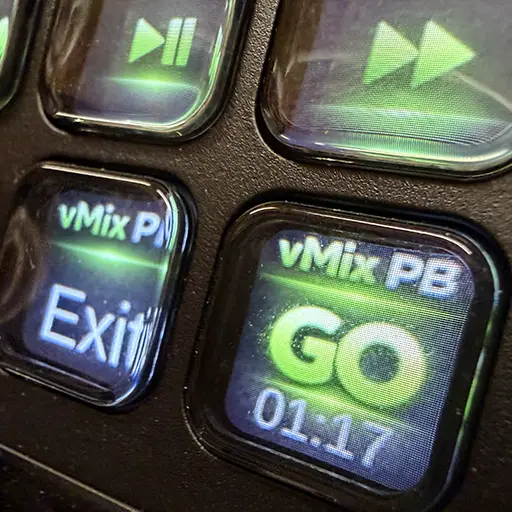
The same applies to live switching and graphics control. Repetitive tasks can run automatically in the background instead of constantly demanding attention from the operator. That leaves more focus for what’s actually happening live on stage.
A Real-World Example
Some time ago, I received an inquiry for a fairly typical conference-style livestream.
The initial concept already included a large crew with clearly separated responsibilities. At first glance, that kind of setup naturally looks professional — after all, there’s a lot going on.
But looking at how the event had been produced previously revealed a different picture:
A lot of manual work, a lot of coordination — yet the production itself still felt neither particularly dynamic nor especially polished.
With a much leaner setup, the event could not only be produced more efficiently, but also more flexibly and with a noticeably higher production quality. Especially with conference formats or hybrid events modern livestream workflows can be optimized far more than many people realize.
What really matters, though, only becomes obvious once the event goes live.
Because that’s the moment where you find out whether a production truly works — or just looked good on paper.
What Really Matters During a Live Production
What matters most isn’t what was planned — it’s what actually happens in the moment.
A speaker may suddenly be unable to use a handheld microphone. Another one might unexpectedly need a different microphone setup altogether.
Situations like these can’t be fully planned in advance. They have to be solved live — quickly, pragmatically and without interrupting the show.
That’s where the real difference becomes visible: short communication paths, clear responsibilities, live production experience and systems that actually allow this kind of flexibility.
Conclusion
Concert recording with four camera angles — produced by a two-person crew.
Modern livestream and hybrid productions no longer require large crews by default.
With well-designed workflows and the smart use of modern technology, high-quality productions can often be delivered far more efficiently — even with smaller teams.
For clients, that mainly means:
- less complexity
- better planning reliability
- and a smoother live production overall
Especially for small and mid-sized events, a setup tailored to the actual production is often far more important than simply bringing in a large crew.
You can learn more about our approach to modern event productions and professional livestreaming on our Event Live Streaming page.