- 11. May 2026
- |dennydeutscher
- |No Comments
Many conference and presentation livestreams work flawlessly from a technical perspective.
Das Bild ist scharf, der Ton kommt an und die Präsentation läuft stabil durch. Trotzdem wirken solche Produktionen überraschend leblos, anstrengend oder einfach langweilig.
The problem is often not the technology itself — but how it is being used.
Equipment Alone Doesn’t Create a Great Production
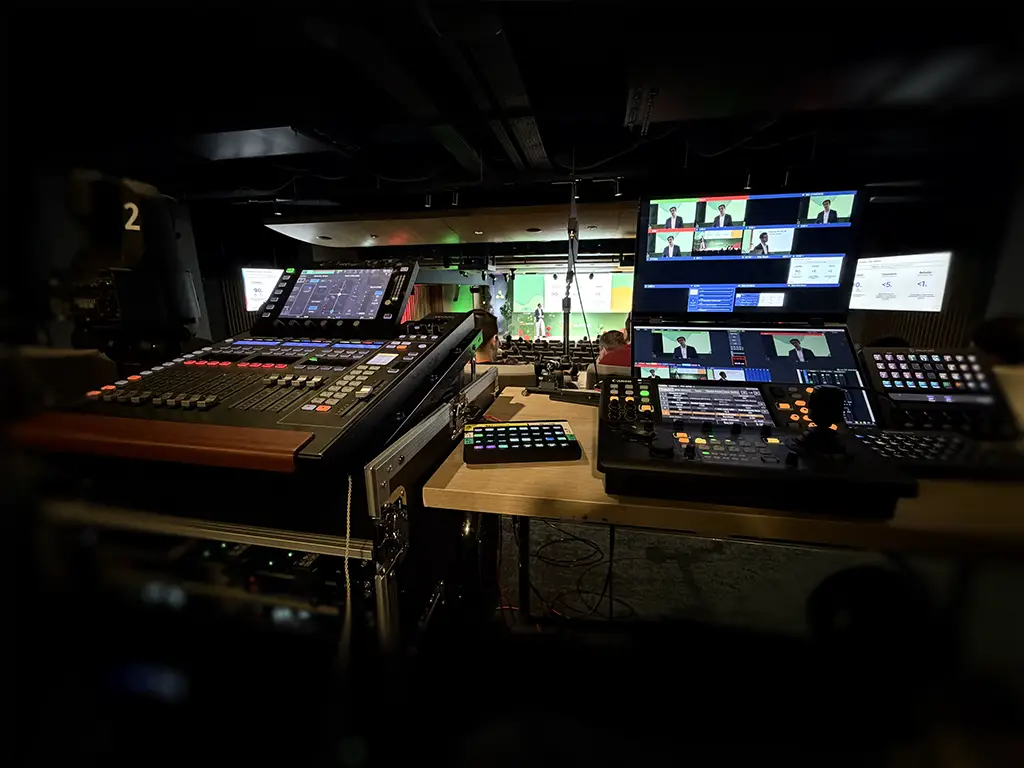
Great productions happen when technology frees the mind for creativity.
Especially at conferences, presentations and hybrid events, visual storytelling is often underestimated.
Many productions still follow a very traditional event-tech mindset: as long as everything is stable, visible and “works”, the job is considered done.
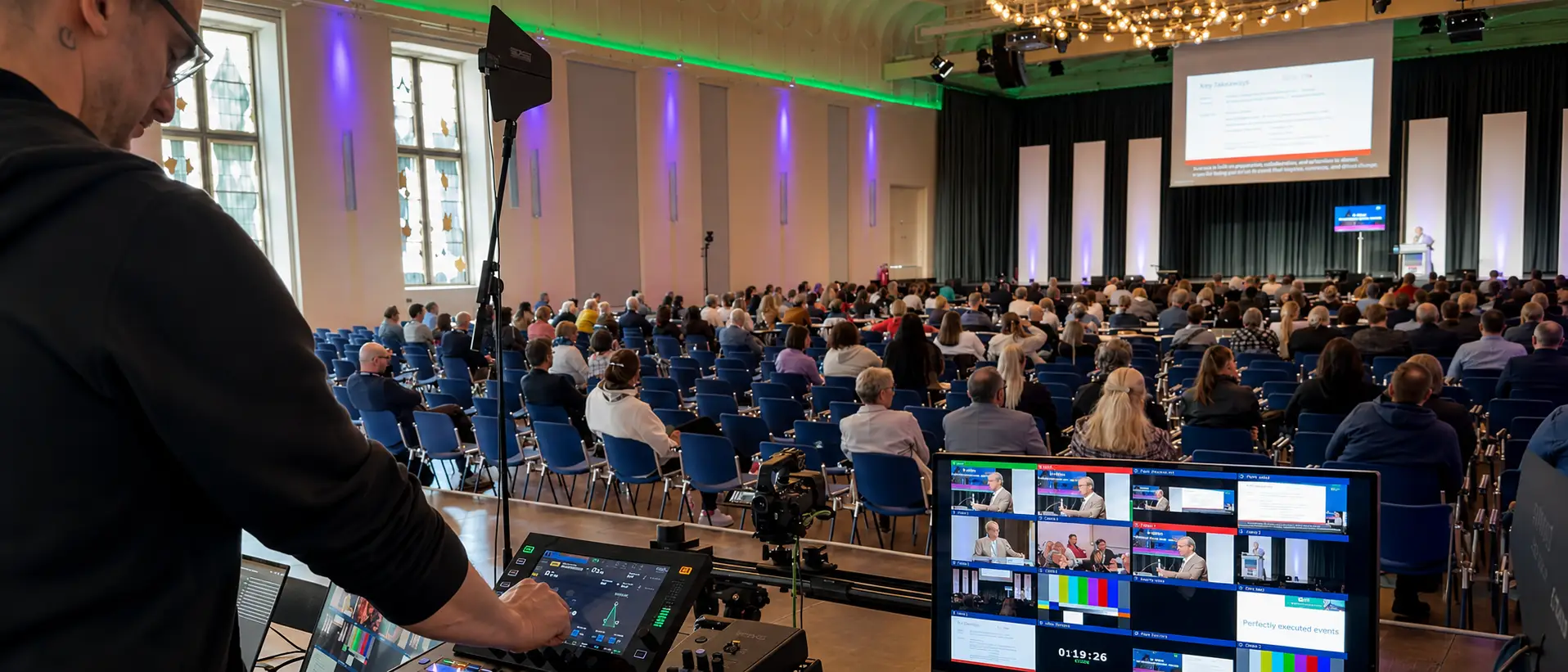
The result is often static camera shots, rigid picture-in-picture layouts and streams that feel more like surveillance footage than an actual production.
Even smaller setups can create far more dynamic and engaging results.
An additional camera angle, a well-placed camera slider or simply choosing better perspectives can improve the overall look of a livestream far more than adding even more gear behind the scenes.
Great Video Switching Keeps Livestreams Engaging
The best productions are often the ones where the technology itself barely gets noticed.
Great live switching is not about cutting as fast as possible or constantly throwing effects on screen. In fact, productions usually feel far more premium when cuts happen at the right moment and viewers can fully focus on the content itself.
A lot of it comes down to timing and reading the room.
When should a shot stay longer on a speaker? When does it make sense to show audience reactions? When does movement create energy — and when does a stream simply become distracting?
These small decisions are what ultimately separate a technically working stream from a production that is genuinely enjoyable to watch.
What is interesting is that modern live production workflows no longer require the entire production crew to be physically on site.
Especially for conferences and presentation events, additional crew members quickly increase costs through travel, hotels and longer setup times.
That is why parts of our live production workflow now operate remotely — without the production ever feeling “remote”.
Our live director Floh handles the switching directly from our studio while monitoring every camera angle, the entire room and the full event in real time. He often reacts to situations before they fully unfold: a subtle nod from the moderator, an unexpected interruption or a speaker suddenly drifting away from the planned flow.
“During the event, we often completely forget that the live switching is being operated remotely. It only becomes noticeable afterwards — usually when the crew’s having dinner.”
Why Modern Production Technology Can Actually Improve Creativity
In the past, every additional camera meant more cabling, longer setup times and usually more crew on site.
A large part of the attention went into managing the setup itself — not the actual production.
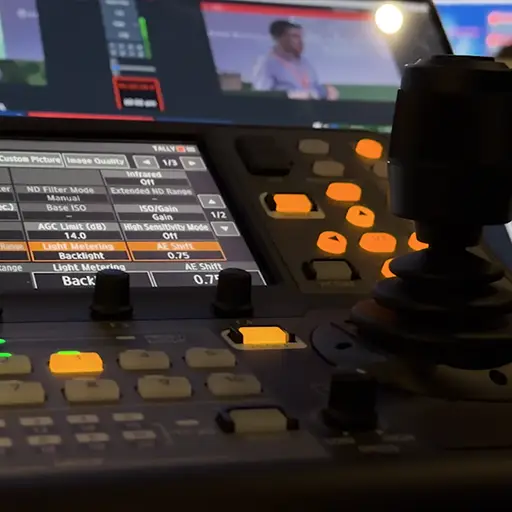
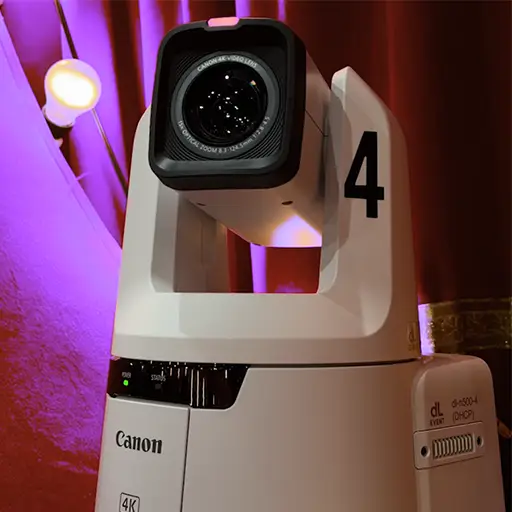
Today, modern productions work far more efficiently. Centrally controlled PTZ camera systems , automated workflows and flexible signal routing create something very important: peace of mind.
And that calmness matters.
Because only when the technology works reliably in the background is there enough mental space left for creative decisions and real attention to what is happening live on stage.
The technology should support the production — not constantly demand attention itself.
Audio Quality: The Most Underrated Part of a Livestream
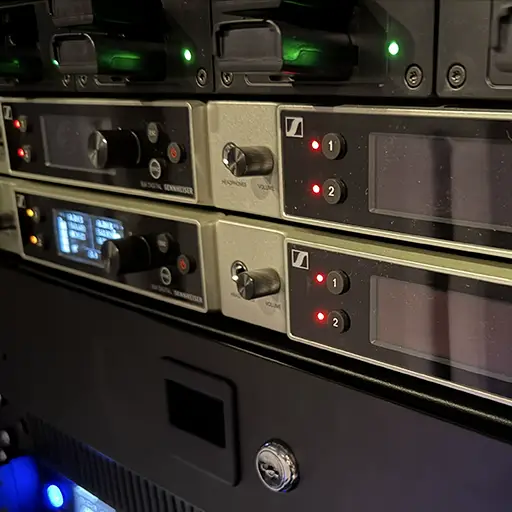
Viewers usually forgive small imperfections in the image far more easily than bad audio.
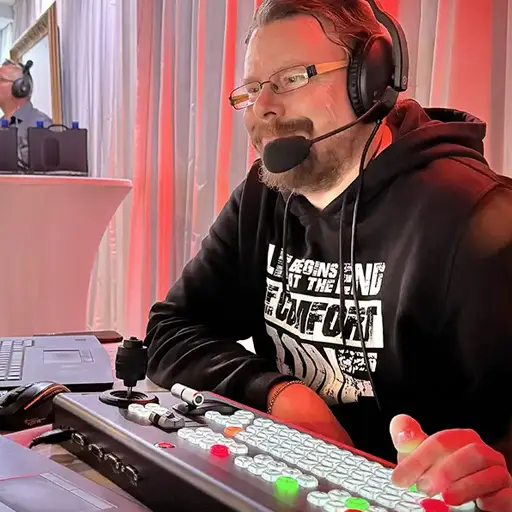
Especially during presentations or panel discussions, livestreams often run in the background — in the office, on the road or even in the car. In those situations, clear speech quickly becomes the most important factor.
Speakers that are too quiet, overly aggressive compression or large volume differences make streams exhausting to listen to — even when the image quality looks excellent.
This becomes especially challenging in difficult environments such as trade shows or open event spaces.
That is where proper microphone selection and real-world audio experience really matter. Not every microphone performs equally well in every situation.
Great audio often goes completely unnoticed — and that is exactly the goal.
A speaker should sound natural — both in the room and in the livestream.
When Less Gear Suddenly Delivers Better Results
Not every event needs giant camera cranes, huge crews or complex broadcast-style setups.
Especially at smaller events, production quality often comes from smart planning rather than simply throwing more equipment at the problem.
Sometimes the control room is set up next door. Sometimes an operator works remotely. And sometimes a small automated camera movement creates far more engaging shots than a static wide angle ever could.
What matters is not how big a setup looks — but how well it actually fits the event.
“For viewers, it ultimately does not matter which systems were used. What they actually notice is something much simpler: Whether a livestream feels smooth, high-quality and professional — or not.”
Conclusion
Even presentation events deserve better visual production.
Great equipment alone does not create a great livestream.
Only when the technical side works reliably in the background is there enough room for creativity, dynamic storytelling and real focus on the event itself.
For viewers, it ultimately does not matter which systems were used.
What they actually notice is something much simpler:
Whether a livestream feels smooth, high-quality and professional — or not.
You can learn more about how we approach modern livestream productions for presentations, conferences and hybrid events on our Event Live Streaming